Snakes in Nillumbik
Snakes are an important part of Nillumbik’s natural environment. They are most active in the warmer months and are commonly found near creeks, rivers, wetlands and bushland areas. Snakes can also visit us in our gardens. Understanding their behaviour helps us stay safe while respecting local wildlife.
The snakes you may encounter in Nillumbik’s environment are venomous and an important part of the local eco system as they help regulate populations of rodents, frogs and other small animals and are themselves prey for other species including birds. Their presence supports a balanced, functioning food web in Nillumbik.
With a little planning and care we can live in harmony with these creatures and remember that snakes will always avoid humans if given the opportunity.
There are four main types of snakes found in Nillumbik Shire Council. At Edendale we tend to see more Tiger Snakes and the occasional Brown Snake.
Common snake species in Nillumbik
Tiger snake

- Appearance: Thick‑bodied with dark and light bands; colour varies
- Habitat: Found in wet and dry habitats; diet includes frogs, rats and mice
- Behaviour: Active in daylight, nocturnal in warmer months; can be defensive if disturbed; highly venomous
Eastern brown snake
- Appearance: Large, slender snake up to around 2 metres long; colour varies from pale to dark brown
- Habitat: Found in a wide variety of habitats including wet and dry bushland; often active during daylight
- Behaviour: Fast‑moving, feeds on small mammals and reptiles; highly venomous
Red‑bellied black snake
- Appearance: Uniform black body with a pale brown snout; vivid crimson to orange belly
- Habitat: Often near water
- Behaviour: Generally shy but dangerous if provoked; highly venomous
Lowland copperhead
- Appearance: Coppery‑brown head; body colour ranges from blackish to grey‑brown with an orange tinge
- Habitat: Prefers areas near water; shelters under rocks, logs, roofing iron or hay
- Behaviour: Avoids encounters with humans; highly venomous
Safety whilst at Edendale
- Stay on designated paths and remain in open, visible areas
- Take care when walking through long grass or near logs and rocks
- Check carefully before reaching into areas you cannot clearly see
What to do if you see a snake:
At Edendale
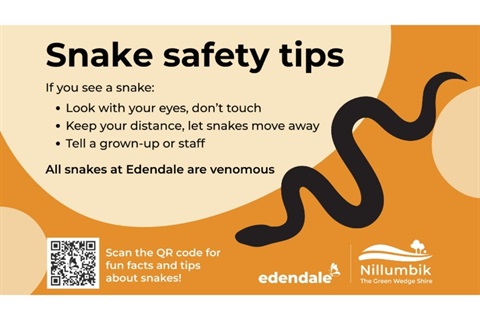
- Stay calm and keep a safe distance
- Do not approach or attempt to move the snake
- Move away slowly and give it space
- Report the sighting to Edendale staff immediately
At home or in the environment
- Step back slowly
- Give the snake space to move away on its own
- If the snake remains on your property and is causing concern, contact a licensed snake catcher.
- If you are bitten by a snake, call 000
- Never try to catch or kill a snake — it is dangerous and illegal under the Wildlife Act 1975
- Remember: snakes will always avoid humans if given the opportunity
Living safely with snakes
Snakes are a natural part of our landscape, and simple precautions can help minimise risks and keep people safe.
At home or in bushland
- Watch where you walk, especially near water or bushy edges
- Stay on pathways where possible
- Wear enclosed shoes outdoors in warm months and gloves and long pants when gardening
- Keep pets supervised during peak snake season (spring–autumn)
- Make your garden less attractive to snakes
- Never try to catch or kill a snake — it is dangerous and illegal under the Wildlife Act 1975.
Reducing snake habitat (“harbour”) around the home
Reducing places where snakes can shelter helps lower the chance of unexpected encounters:
- Keep grass short and remove piles of wood, tin, rocks or garden debris, especially near you house
- Manage compost, mulch and stored materials so they don’t create hiding spots
- Where practical, seal gaps under sheds, steps and concrete slabs
- Reduce rodent activity — fewer prey species make your property less attractive to snakes. E.g. if you keep chickens, change the way you feed them, so mice and rats are not attracted.
Climate change and snakes in Nillumbik
Climate change is influencing the behaviour, habitat and seasonal activity of snakes. Research highlighted by free science suggests that rising temperatures and changing weather patterns are affecting when snakes are active, where they live, and how they interact with the ecosystems around them
- Longer and more active snake seasons - Warmer temperatures across the year may result in longer snake seasons
- Changes in activity patterns - Hotter days may result in snakes being active earlier or later in the day as the try to avoid heat stress.
- Shifts in habitat and range - Changing rainfall, drought and rising temperatures can impact habitats, pushing snakes toward new areas in search of suitable conditions.
- Impacts on the food chain - Declines or changes in food sources (such as frogs and rodents) can affect snake survival and behaviour
- Reproductive and ecological stress - Climate changes can disrupt breeding behaviours and reproductive outcomes and destabilise the wider food web in which snakes play a key role.
Understanding these shifting patterns helps us prepare for a changing environment while continuing to value wildlife as part of Nillumbik’s natural systems.